
How to Choose the Right Industrial Fasteners in Kuwait
Choosing the correct fastener is essential for the safety, durability, and efficiency of any construction, maintenance, or industrial project. A bolt that looks suitable may still fail if its material, grade, thread, coating, or dimensions do not match the application. This guide explains the main points Kuwait contractors, maintenance teams, fabricators, and purchasing departments should check before ordering industrial fasteners.
1. Start with the application
First identify what the fastener must hold and where it will be used. Structural steel, machinery, piping supports, electrical installations, HVAC systems, and concrete anchoring all create different loads and operating conditions. Determine whether the connection faces tension, shear, vibration, repeated movement, or impact. For critical work, always follow the project drawing, engineering specification, and approved standard rather than choosing only by appearance or price.
2. Choose the correct fastener type
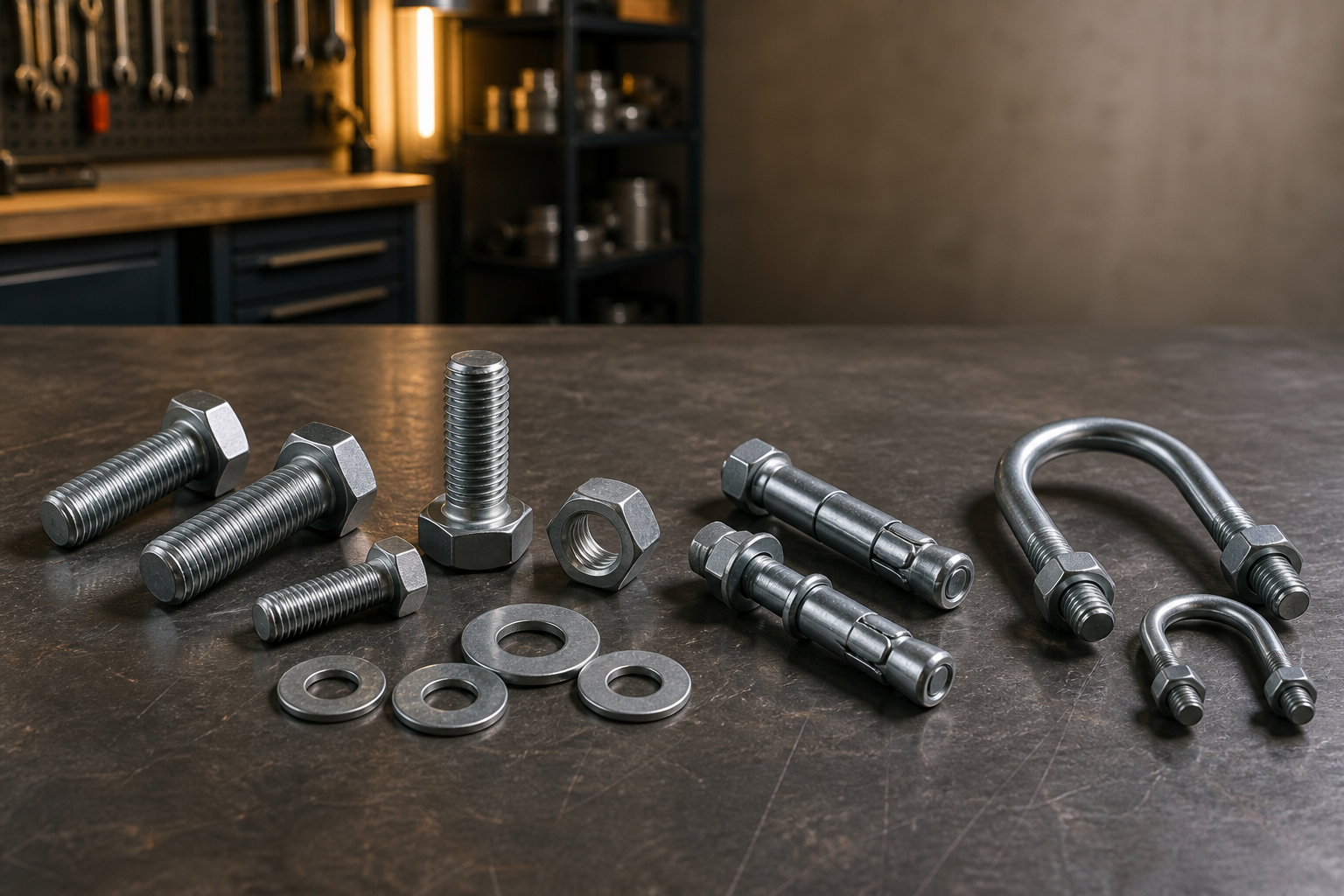
Hex bolts and matching nuts are widely used for steel assemblies, equipment, and general construction. Washers distribute load and help protect the joined surface. Anchor bolts and mechanical anchors connect equipment, frames, and supports to concrete. U-bolts are commonly used to secure pipes and round sections. Screws and nails suit lighter assembly and finishing tasks. Using the intended fastener type improves installation quality and makes future maintenance easier.
3. Check size, thread, and fit
Confirm the diameter, length, thread pitch, and thread system before buying. Metric and imperial fasteners can appear similar but are not interchangeable. A mismatched nut may start on a bolt and then damage the thread or loosen under load. Measure the required grip length and allow enough thread engagement without selecting an unnecessarily long bolt. When replacing an existing fastener, bring a sample or accurate measurements to avoid costly site delays.
4. Select the right material and grade
Fastener strength depends on its material and grade. General-purpose mild-steel fasteners may be suitable for noncritical indoor work, while high-strength bolts are used where the design requires greater load capacity. Stainless steel can provide useful corrosion resistance, but the correct stainless grade still depends on the environment. Never substitute a different grade on a structural or safety-critical connection without engineering approval. Bolt, nut, and washer specifications should be compatible as a complete assembly.
5. Plan for Kuwait’s environment
Heat, dust, humidity, coastal air, chemicals, and outdoor exposure can shorten fastener life. Projects near the coast or in corrosive industrial areas may require stainless steel or a suitable protective coating. Zinc-plated fasteners can work for many light-duty or protected applications, while hot-dip galvanized systems are often considered for tougher outdoor exposure. Coating choice must also account for the base material and project specification. Periodic inspection remains important even when corrosion-resistant products are used.
6. Confirm standards and documentation
Professional projects frequently specify standards such as ISO, DIN, ASTM, or BS. The standard can define dimensions, mechanical properties, tolerances, marking, and testing. Before placing a large or critical order, confirm the required standard, grade, finish, and any certificate or traceability requirement. Clear purchasing descriptions reduce mistakes and help suppliers quote the correct product.
7. Use the correct installation method
A high-quality fastener can still fail if it is installed incorrectly. Keep mating threads clean and undamaged. Use suitable hand tools or calibrated tightening equipment where the specification requires controlled torque. Avoid random over-tightening, which can stretch the bolt, strip threads, or damage the connected material. Tightening values depend on several factors, including diameter, grade, lubrication, coating, and joint design, so use approved project data.
8. Inspect and maintain the connection
Check fasteners during installation and routine maintenance for corrosion, looseness, damaged threads, cracking, or deformation. Replace questionable components with the correct specification rather than reusing damaged items. Vibration-prone equipment may need an approved locking method. Maintaining simple records for critical connections can make future inspections faster and more reliable.
Fastener buying checklist
Before requesting a quotation, prepare the fastener type, diameter, length, thread pitch, material, grade, finish, quantity, required standard, certificate requirements, and application environment. Include a drawing or sample when identification is uncertain.
Hussain Al Basri Construction Material EST supplies nuts, bolts, washers, anchors, U-bolts, screws, nails, tools, safety products, and other industrial hardware in Kuwait. Contact our sales team with your specification or sample so we can help you identify suitable products for your project.
Important note: This article is general purchasing guidance. Structural, lifting, pressure, refinery, and other safety-critical applications must follow approved engineering specifications and relevant regulations.
